In today’s digital age, having a strong online presence is crucial for individuals and businesses alike. Whether you are looking to showcase your portfolio, sell products, or simply share your thoughts with the world, having a well-designed website can help you reach your goals. With the right tools, such as a website builder with domain name, you can unlock your creativity and design a website that truly reflects your unique identity.
Understanding the Basics of Website Building
Embarking on the journey of website creation begins with a foundational understanding of its essential components. At the outset, it’s crucial to grasp the structure of a website, which comprises its layout, the various design elements, the content it hosts, and its functional capabilities. These components serve as the building blocks of your digital platform, each playing a pivotal role in delivering a cohesive user experience. Utilising a website builder that includes a domain name offering simplifies this process considerably. Such tools demystify the technical aspects, allowing you to focus on bringing your vision to life with ease. The layout serves as the skeleton of your website, dictating the arrangement of content and visual elements. Design elements, on the other hand, add character and appeal to your site, encompassing everything from colour schemes to typography. Content is the heart of your website, delivering the message you wish to convey to your audience. Functionality, which includes navigation and interactive features, ensures that users can explore your site with ease. By understanding these basics, you are better equipped to leverage a website builder effectively, crafting a site that not only looks professional but also functions seamlessly across various devices. This foundational knowledge empowers you to embark on your website-building journey with confidence, paving the way for a successful online presence.
The Significance of a Domain Name in Your Online Identity
A domain name does far more than simply act as a digital address for your website. It encapsulates the essence of your brand or personal identity in the vast expanse of the internet. Choosing a domain name that resonates with your audience, is easy to recall, and reflects the content and ethos of your site is paramount. This pivotal element of your online identity serves as the first point of interaction with your audience, setting the tone for their experience on your website. The integration of a website builder that offers domain name services simplifies the process of selecting and securing a domain name that aligns perfectly with your vision. It’s not just about having a web presence; it’s about making a memorable impact. A thoughtfully chosen domain name enhances your credibility and aids in building trust with your visitors. It’s a critical step in crafting a cohesive and recognisable brand online. Moreover, in the context of SEO, a relevant and succinct domain name can positively influence your website’s visibility on search engines, thereby attracting more traffic. The power of a domain name in establishing and reinforcing your online identity cannot be overstated. It’s the cornerstone upon which your digital presence is built, influencing perceptions and guiding interactions. As you venture into the digital landscape, bear in mind the profound role a domain name plays in the success and recognition of your website.
Combining a Website Builder with a Domain Name
Merging the capabilities of a website builder with the acquisition of a domain name offers a streamlined approach to web creation, markedly enhancing the ease and efficiency of the process. By choosing this integrated solution, individuals are presented with the dual advantage of designing their website whilst simultaneously securing a domain that best represents their brand or personal project. This harmonisation not only simplifies the initial stages of setting up a digital presence but also ensures consistency across your website’s identity and its navigational address on the internet.
The amalgamation of these tools facilitates a seamless transition from concept to live website, with minimal technical hurdles. Users benefit from a comprehensive suite of design options, enabling the crafting of visually appealing and highly functional websites without the need for extensive coding knowledge. The intuitive interfaces of modern website builders empower users to imbue their sites with a sense of individuality and professionalism that stands out in the digital landscape.
Having the domain name registration process integrated within the website builder platform removes the often daunting task of domain management, allowing creators to focus more on the content and design aspects of their website. It ensures that the domain and website are intrinsically linked from the outset, reducing potential issues related to domain configuration and website hosting alignment.
Furthermore, this consolidated approach offers an opportunity for creators to thoughtfully select a domain name that resonates with their website’s purpose and target audience, reinforcing brand identity and aiding in memorability. The choice of a domain name, when made in tandem with website design, creates a cohesive online presence that effectively communicates the intended message to visitors.
The Role of Hosting in Your Website’s Performance
Web hosting plays an indispensable role in the functionality and accessibility of your website. It’s the backbone that supports your site’s presence on the internet, ensuring that visitors can access your content anytime and anywhere. The choice of hosting service directly impacts your website’s loading times, reliability, and overall user experience. Opting for a high-quality hosting provider is crucial for maintaining the performance and speed of your site, which are key factors in user retention and satisfaction. Furthermore, the right hosting plan can significantly influence your website’s ability to handle traffic spikes without downtime or slow loading speeds, thus preserving the integrity of your online presence.
It’s also worth noting that hosting services offer various plans tailored to different needs, from shared hosting for smaller sites to dedicated servers for large-scale enterprises. Each option comes with its own set of features, such as bandwidth limits, storage capacity, and security measures, all of which should be considered in light of your website’s specific requirements. Security features, including SSL certificates and regular backups, are essential for protecting your site from cyber threats and data loss.
When integrating hosting with your chosen website builder and domain name, ensure compatibility and seamless operation to provide a solid foundation for your site. The synergy between your domain name, website builder, and hosting service lays the groundwork for a robust online platform that supports your digital ambitions, be it for personal expression or business ventures. Therefore, careful selection and management of your web hosting are paramount in achieving optimal website performance and a strong online presence.
Navigating the World of Website Builders and Hosting Packages
Choosing the ideal website builder and hosting package can be a daunting task, given the plethora of options available on the market. When embarking on this selection process, it’s essential to consider a range of factors that can significantly influence the success and functionality of your website. For those seeking a website builder with an integrated domain name, prioritising ease of use and design flexibility becomes key. A user-friendly interface and a diverse range of design options enable a more personalised and engaging website creation experience. Additionally, the level of customer support offered by the provider is critical, especially for individuals with limited technical expertise, as it ensures that help is readily available when needed.
On the other hand, when assessing hosting providers, the focus shifts towards reliability and performance metrics such as uptime guarantees and loading speed. Security features are equally paramount, with measures like SSL certificates and regular backups being essential for protecting your website against contemporary cyber threats. Scalability is another vital consideration, as your hosting plan should be capable of accommodating your site’s growth and the increasing demands of your online presence.
Furthermore, the synergy between your chosen website builder and hosting service cannot be overstated. Ensuring that these elements are compatible is crucial for a smooth operation, which in turn, enhances the overall user experience of your site. By carefully evaluating these aspects, you can make a well-informed decision that aligns with your website’s requirements and ambitions, setting a solid foundation for your online venture.
Design Principles for Creating an Engaging Website
In crafting an engaging website, the application of core design principles is indispensable. These guidelines are instrumental in orchestrating an interface that is not only visually appealing but also highly user-centric. Foremost among these principles is simplicity, which advocates for a clean and uncluttered layout that facilitates easy navigation and quick comprehension of content. This minimalistic approach helps in removing any potential distractions, enabling users to focus on the essential elements of your site.
Consistency across the website ensures a cohesive user experience. This involves uniformity in the use of colours, typography, and design motifs, which aids in reinforcing your brand identity and making your website easily recognisable to visitors. Consistency also extends to the functionality of navigational elements, ensuring that users can intuitively interact with your website without confusion or frustration.
Visual hierarchy is another key principle, guiding the placement and presentation of elements in a manner that naturally directs the viewer’s attention to priority content. Through strategic use of size, colour, and layout, you can highlight important information and guide visitors through your site in a logical sequence, thereby enhancing the user journey.
Incorporating these design principles through a website builder with a domain name enables you to construct a digital space that is not just aesthetically pleasing but also optimised for user engagement and satisfaction. By leveraging the tools and templates provided, you can apply these foundational design concepts to create a bespoke website that effectively communicates your message and engages your target audience.
Customisation Options Available in Website Builders
A significant advantage of utilising a website builder is the breadth of customisation features at your disposal. These platforms are designed to cater to your creative flair, enabling you to tailor every aspect of your site to reflect your brand’s personality or your personal aesthetic. Users have the liberty to select from an expansive array of colour palettes and font styles, ensuring the visual elements of the site align with their vision.
Beyond the basics of colour and typography, website builders empower users to enhance their sites with a variety of multimedia elements such as images, videos, and slideshows. These can be strategically incorporated to add dynamism to your site, making it more engaging for visitors. Interactive features like contact forms, social media integrations, and e-commerce capabilities can also be seamlessly added, enriching the functionality of your site and encouraging visitor interaction.
The flexibility to rearrange layout templates and adjust design elements via drag-and-drop interfaces means that even those without any coding knowledge can craft professional-looking websites. This accessibility is a cornerstone of modern website builders, ensuring that everyone, regardless of technical skill, can bring their digital vision to life.
Moreover, the option to preview changes in real-time allows for a process of experimentation. You can tweak and refine various elements until you achieve the desired outcome, ensuring your website not only looks exceptional but also resonates with your intended audience. This level of customisation ensures that your website will stand out in the digital landscape, capturing the essence of your brand or personal identity with precision and flair.
Optimising Your Website for Search Engines
Achieving high visibility on search engines is a pivotal aspect of cultivating a successful online presence. Effective SEO practices enable your website to rank well on search engine results pages (SERPs), thereby increasing the likelihood of attracting a greater volume of organic traffic. When utilising a website builder with a domain name, it’s essential to exploit the available SEO tools and features to their full potential. This includes the judicious use of keywords within your website’s content, titles, and meta descriptions, ensuring that your site is easily discoverable by your target audience.
Creating quality content that addresses the needs and interests of your audience is another cornerstone of SEO. This not only aids in engaging visitors but also in establishing your website as an authoritative source within your niche, which search engines value highly. Furthermore, ensuring your website’s architecture is structured logically makes it easier for search engine bots to crawl and index your pages, enhancing your site’s SEO performance.
Embedding social media sharing options and encouraging external sites to link back to your content can significantly amplify your online visibility, further bolstering your SEO efforts. Moreover, paying attention to website loading speeds and ensuring that images are optimised for the web are critical, as these factors contribute to both user experience and search engine ranking.
Leveraging a website builder that incorporates these SEO functionalities allows for a more streamlined approach to optimising your website, facilitating a strategy that integrates seamlessly with your overall design and content goals. By prioritising these optimisation techniques, you can significantly enhance your website’s potential to rank well on search engines, drawing in a wider audience to your digital doorstep.
The Importance of Mobile Responsiveness
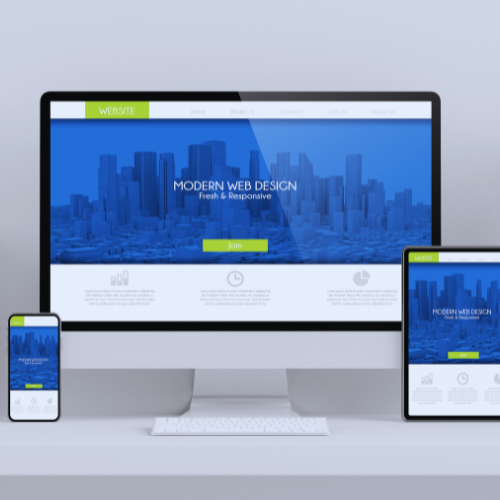
In an era where digital consumption is increasingly shifting towards handheld devices, ensuring that websites are optimally viewable across a spectrum of screens has become non-negotiable. The crux of mobile responsiveness lies in its ability to dynamically adjust content, layout, and navigation to fit the dimensions of various devices, be it smartphones, tablets, or desktops. This adaptability not only enhances the user experience but is also a critical factor in maintaining engagement levels and reducing bounce rates.
Google’s prioritisation of mobile-friendly websites in search results further underscores the importance of this feature. Websites that are not mobile-responsive risk plummeting in search rankings, significantly reducing their visibility and, consequently, their traffic. Therefore, a website builder that ensures mobile responsiveness straight from the design phase is indispensable. It enables creators to visualise and test how their site will appear on different devices, ensuring consistency in performance and user experience.
Moreover, with the proliferation of social media usage on mobile devices, the likelihood of content being shared and accessed on the go is higher than ever. A mobile-responsive website can capitalise on this trend, offering an effortless browsing experience that encourages users to stay longer and engage more deeply with the content. This not only aids in building a loyal audience base but also in driving conversions, whether they be sales, sign-ups, or other actions crucial to the website’s objectives.
In essence, embracing mobile responsiveness is not merely about aligning with current trends; it’s a forward-looking strategy that places user experience at the forefront, ensuring that a website is accessible, navigable, and enjoyable for all, irrespective of the device used.
Keeping Your Website Secure and Updated
In the digital realm, the security of your website is paramount, protecting it against the myriad of cyber threats that evolve daily. Implementing robust security protocols such as SSL (Secure Sockets Layer) certificates acts as a first line of defence, encrypting data between your website and its visitors to safeguard personal information. Additionally, integrating firewalls can prevent unauthorised access, while regular backups ensure that, in the event of data loss, your website can be restored to its former state with minimal disruption.
Equally critical is the maintenance of your website’s software. Regular updates are essential, as they often include patches for security vulnerabilities that, if exploited, could compromise your site’s integrity. This proactive approach not only fortifies your website against attacks but also ensures its components function optimally, providing a seamless experience for users.
Beyond security, updates can bring new features and improvements that enhance the overall functionality and user experience of your website. Staying abreast of these updates and implementing them promptly is crucial in maintaining a competitive edge in the digital landscape.
By prioritising these security and maintenance practices, you ensure that your website remains a secure, efficient, and reliable resource for your audience, reflecting the professionalism and credibility of your brand or personal identity in the online world.
Analysing and Understanding Your Website’s Traffic
Diligently monitoring your website’s traffic yields crucial insights into its performance and audience engagement levels. Employing analytical tools, such as Google Analytics, enables the dissection of pivotal metrics including visitor sources, the volume of page visits, duration of sessions, and patterns in user behaviour. This rich data landscape offers a comprehensive view into how visitors interact with your site, spotlighting strengths to build upon and areas requiring enhancement. By understanding which pages captivate your audience and where you may be losing their interest, targeted adjustments can be made to optimise user experience and content relevance. Additionally, discerning the origins of your traffic—be it through search engines, social media platforms, or direct entries—assists in refining marketing strategies to better reach your intended audience. Leveraging a website builder that integrates domain name management and offers insights into analytics can streamline this evaluative process, ensuring that your website not only attracts but also retains a growing visitor base. Through meticulous analysis and subsequent application of these insights, your website can evolve to better meet the needs of your audience, fostering enhanced engagement and bolstering your online presence.
Learning from Successful Websites
Exploring the landscape of successful websites within your sector offers a treasure trove of insights that can elevate your own digital platform. Investigate the core elements that contribute to their triumph, such as innovative design, impeccable content quality, seamless user interface, and strategic marketing endeavours. This examination allows you to discern the benchmarks of excellence and the nuanced tactics they employ to captivate and retain their audience. Utilising a website builder integrated with domain name capabilities enables you to seamlessly incorporate these gleaned insights into your project. Focus on how these leading websites optimise each visitor’s journey, from navigation flow to the alignment of content with user intent, to ensure a compelling and memorable online experience. Pay close attention to their approach in fostering engagement through interactive elements and how they manage to present a cohesive brand narrative across all pages. By applying these observed best practices and innovative strategies to your website, you position your digital presence not merely to compete but to set new standards of excellence within your industry. This method of learning and adaptation is a dynamic process, encouraging ongoing refinement and innovation in your website’s development.